
The short answer
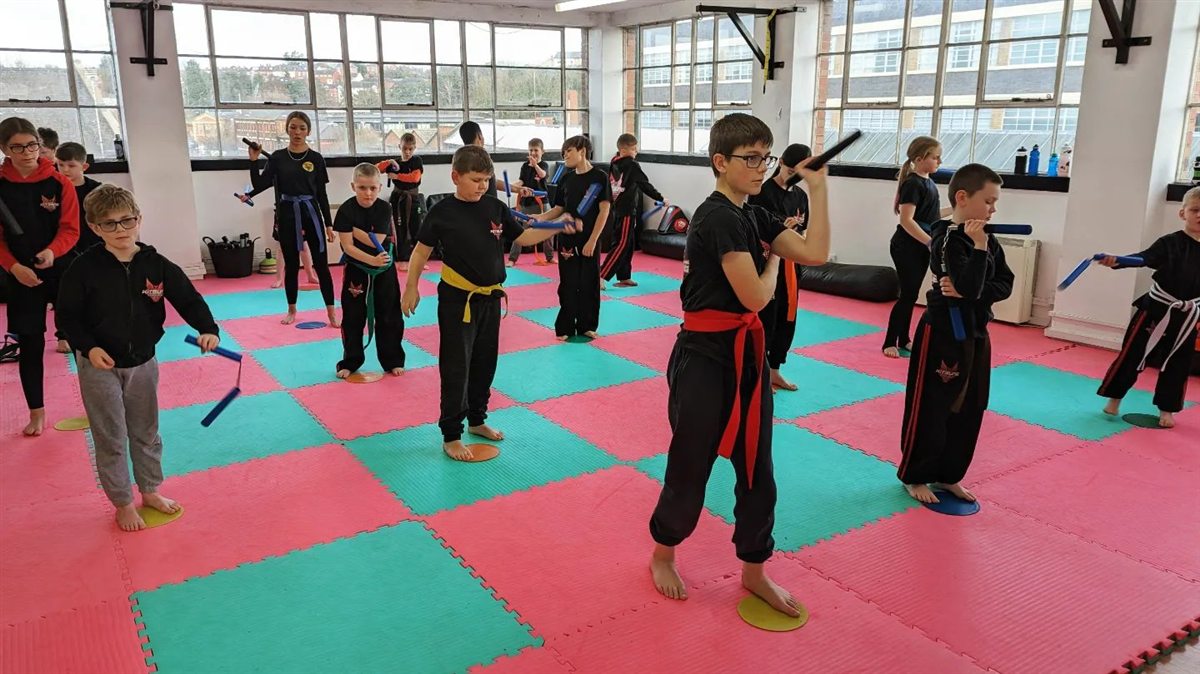
Yes. Kitsune Family Martial Arts is a shared class in which a parent or carer trains alongside a child aged 7 or over. It is not an adult watching from the edge while the child takes part.
Both people follow the Kitsune curriculum, which blends kickboxing, boxing, grappling and practical self-defence. You can begin together without matching experience or fitness levels. The more useful question is whether you both enjoy learning in the same class and want the same weekly routine.
What does training together actually mean?
The published Family Martial Arts format includes a shared curriculum, partner work and achievable goals. That gives a family common skills to practise and progress to discuss after class.
Training together does not mean that an adult and child must move at an identical pace, use the same power or find every activity equally easy. It means sharing the coaching environment while each person works from an appropriate starting point.
That distinction is worth checking when you compare local options. Some clubs describe themselves as family-friendly because adults and children both attend the academy, but place them in separate classes. If your priority is shared active time, ask whether you will genuinely participate in the same session.
Do your fitness levels need to match?
No. The programme is presented as suitable for beginners, and Kitsune states that coaches guide each person at an appropriate level. One person may learn a movement quickly while the other needs more time; that is normal, not a reason to wait until your fitness matches.
The NHS physical activity guidance for children and young people says exercise should suit a child’s age, ability and experience, and that new exercise should begin gradually. That is a sensible standard to keep in mind during any shared class.
If either person has a health condition, injury or additional physical need, get relevant professional advice where needed and tell the academy before taking part. Public programme information cannot replace individual medical guidance.
When can a shared class be a good fit?
Family Martial Arts may suit you when:
- you want active time together rather than two separate drop-offs;
- both of you are curious about the same broad mix of martial arts;
- you like the idea of encouraging one another while learning;
- a shared weekly routine would be easier to maintain; or
- you want to experience the class before making a longer decision.
Try not to turn the class into a parent-versus-child competition. The value is in taking part together while allowing each person to progress in their own way.
When might separate programmes suit you better?
A shared class is one option, not automatically the right answer for every household.
If your child is aged 4–7, Kitsune Cubs is the published age-appropriate route. A child aged 7–12 who wants a class centred on children of the same age can explore Kitsune Kids, while a teenager or adult who prefers an independent session can consider Adult Kickboxing.
Separate programmes may also make more sense when the adult and child want different styles or when one person would enjoy training more without a family member beside them. The aim is to choose the format both people will realistically want to return to.
Five things to notice during your free week
Use the trial to answer practical questions rather than trying to predict everything in advance:
- Are both the adult and child actively included in the session?
- Do the instructions feel clear at each person’s current level?
- Can each of you work at a manageable pace without feeling compared?
- Do you encourage one another without taking over?
- Would you both look forward to attending again next week?
You do not need identical answers to every question, but both people should feel that the class is understandable, welcoming and worth repeating.
Choose a local starting point
Kitsune lists venues in Kidderminster, Bromsgrove, Aston Fields, Wychbold and Droitwich Spa. Current programme timetables and venue-by-venue availability are not published, so check the location overview and ask the team which Family Martial Arts sessions currently fit your area.
When you are ready, request the free week for both participants. It is the clearest way to test the shared format, coaching and routine before you decide whether Family Martial Arts—or separate programmes—is the better fit.